
HURON & HURON TOWNSHIP
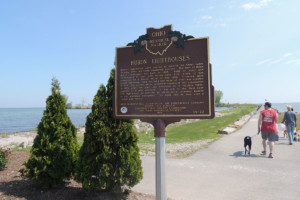
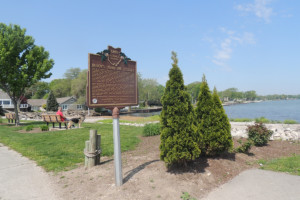 HURON’S MARITIME HISTORY & HURON LIGHTHOUSE
417 Main Street, Huron, OH
Side 1: Lake Erie commerce has played a central role in the development of Huron. Important among Huron’s maritime industries were shipbuilding and commercial fishing. The city’s shipbuilding industry dates to the first decades of the nineteenth century. Shipyards were located on the Huron River’s west bank, slightly north of this marker, and also upstream at Fries Landing. Among the vessels built at Huron were the Great Western, constructed in 1838 and the first lake ship to have above-deck cabins, and the Golden Age, which, at 286 feet, was the largest craft on the Great Lakes when built in 1886. Huron shipbuilding declined as the nineteenth century drew to a close. Commercial fishing emerged thereafter, serving as Huron’s economic cornerstone for over fifty years. Huron’s fishing enterprises included the Huron, Kishman, Scott, and Zimmerman fish companies. By 1950, however, polluted lake waters ravished the once-lucrative industry. Although shipbuilding and commercial fishing are no longer a part of Huron’s daily life, they each had a profound effect upon the community’s growth for nearly two centuries.
[/fusion_text]
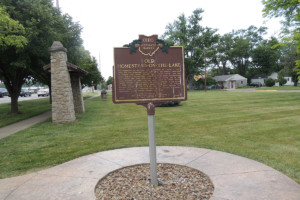 OLD HOMESTEAD ON-THE-LAKE & OLD MEEKER FARM
Old Homestead Beach Association South Park
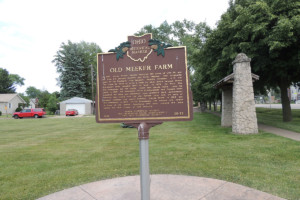 Side 2: In 1837, Aaron Wright Meeker received 160 acres of Lots 26 and 32 from his parents Stephen and Polly Meeker, who originally came to the Firelands from Vermont. Heavily forested, A. W. cut the trees by hand to build a farm on what would become Huron Township’s most valuable tract of land. In 1859, he built The Old Homestead for his family, which still stands today. Upon his death in 1896, his daughters Metta Breckenridge and Hannah Stein inherited the farm and embarked upon separate land development ventures that would turn the old Meeker farm into an area of summer cottages and resort beaches, Chaska Beach in 1925 and Old Homestead in 1927. In Old Homestead, the streets are named in honor of the Native Americans who once claimed the area before the 1805 Treaty of Fort Industry.
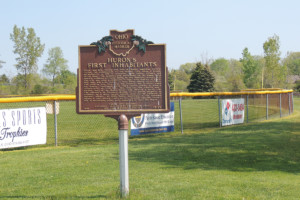 HURON’S FIRST INHABITANTS
Faben’s Park, Huron OH
Huron and Erie County are rich in Native American history. During the construction of the nearby Ohio Route 2 bypass, archeologists in 1976-77 uncovered three Native villages and burial sites. The Anderson site, overlooking the Old Woman Creek estuary, contains artifacts dating to the fifteenth century A.D. The site was once a permanent village, with remains of bowls, fire pits, and even traces of food found among its artifacts. The Jenkins site, also near the estuary, was a winter camp for Indians. Excavators there found several pieces of pottery carbon-dated to 1470 A.D. The final dig, the Enderle site — located west of the Huron River — was strictly a burial site. The discovery of European objects in its graves suggests its creation by a more recent people, such as the Delaware or Wyandot Indians. In 1805, Native Americans in the Firelands signed a land cession treaty at Fort Industry (modern Toledo), and in succeeding years were compelled to leave the region.
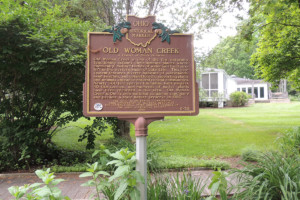 OLD WOMAN CREEK – A feature of Ohio’s Estuaries
2514 Cleveland Road E, Huron, OH – Old Woman Creek State Nature Preserve
Old Woman Creek is one of the few naturally functioning estuary environments – places where chemically-distinct bodies of water meet and mix – left in the western basin of Lake Erie. This ecosystem features diverse habitats of marshlands, sand beaches, and upland forests, supporting plants and animals unique to natural coastal communities. Nearly 300 bird species (including bald eagles), 40 fish species, and hundreds of native plants have been recorded in this area. Old Woman Creek is Ohio’s only national estuarine sanctuary and became a state nature preserve in 1980.
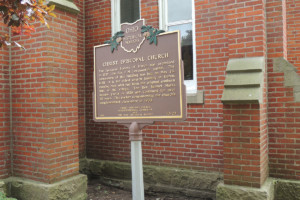 CHRIST EPISCOPAL CHURCH
120 Ohio St., Huron OH
The Episcopal Society of Huron was organized in 1837, the Rev. F. M. Levenworth, pastor. The cornerstone of this building was laid May 23, 1838; it is the oldest church building in Huron, standing near what had been the original southern limit of the village. The Rev. Samuel Marks became pastor in 1839 and continued for over 40 years. This marker commemorates the church’s sesquicentennial observance in 1988.
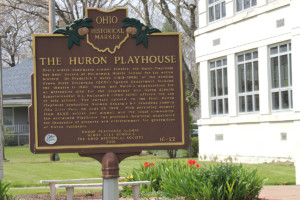 THE HURON PLAYHOUSE
325 Ohio St., Huron OH
Ohio’s oldest continuing summer theatre, the Huron Playhouse has been housed at McCormick Middle School for its entire history. Dr. Frederick G. Walsh (1915-1999) of the Bowling Green State University (BGSU) Speech Department founded the theatre in 1949. Huron met Walsh’s expectations for an attractive site for the playhouse, and Huron Schools Superintendent R.L. McCormick (1904-1978) offered the use of this school. The curtain opened on the first Huron Playhouse production, Norman Krasna’s hit Broadway comedy John Loves Mary, on June 29, 1949. With persisting support from BGSU, actors and alumni, and the local community, the acclaimed Playhouse has provided theatrical experience for thousands of students and entertainment for generations of Huron residents.
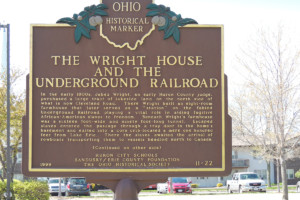 THE WRIGHT HOUSE AND THE UNDERGROUND RAILROAD & OLD MAIN STREET
417 Main St., Huron OH
Side 1: In the early 1800s, Jabez Wright, an early Huron County judge, purchased a large tract of lakeside land on the north side of what is now Cleveland Road. There Wright built an eight-room farmhouse that later served as a “station” on the fabled Underground Railroad, playing a vital role in aiding fugitive African-American slaves to freedom. Beneath Wright’s farmhouse was a sixteen foot-wide and ninety foot-long tunnel. Escaped slaves entered the passage through a trap door in the home’s basement and exited into a corn crib located a mere one hundred feet from Lake Erie. There the slaves awaited the arrival of rowboats transporting them to vessels heading north to Canada.
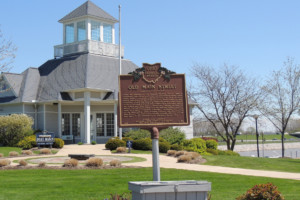 Side 2: OLD MAIN STREET – After the passage of the Federal Housing Act of 1949, a concerted, nationwide effort toward modernizing aging urban areas began. As a part of this trend, the city of Huron began demolition of 38 buildings along Main Street in 1969. Completed in 1975, the federally subsidized Huron urban-renewal project reshaped much of the community’s downtown, adding the modern-day boat basin. Structures removed included the Harbor Inn, the Huron Dairy, and the Vermilion Rubber Company, along with many residential buildings. Throughout the course of the undertaking, many citizens opposed the alteration of Main Street. The project was carried through, however, and the boat basin is the centerpiece of downtown Huron today.
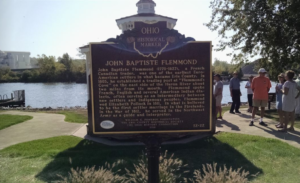 JOHN BAPTISTE FLEMMOND
SE corner of Main Street and Wall Street, Huron OH – In front of the Gazebo near fishing pier parking lot
John Baptiste Flemmond (1770-1827), a French Canadian trader, was one of the earliest Euro-American settlers in what became Erie County. In 1805, he established a trading post at “Flemmond’s Cove” on the east side of the Huron River about two miles from its mouth. Flemmond spoke French, English and several American Indian dialects, often serving as an intermediary between new settlers and indigenous peoples. Flemmond wed Elizabeth Pollock in 1811, in what is believed to be the first settler marriage in the Firelands. In the War of 1812, he served in the Northwest Army as a guide and interpreter. READ MORE
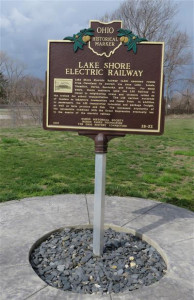
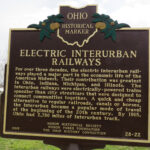
ELECTRIC INTERURBAN RAILWAYS & LAKE SHORE ELECTRIC RAILWAY
N Jim Campbell Blvd, Huron OH – Lake Shore Electric Trail
This is a 2-sided marker – READ MORE
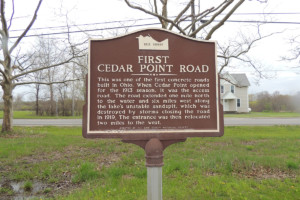 FIRST CEDAR POINT ROAD
2715 Cleveland Road W, Huron OH, .6 miles west of Rye Beach Rd.
this was one of the first concrete roads built in Ohio. When Cedar Point opened for the 1913 season, it was the access road. The road extended one mile north to the water and six miles west along the lake’s unstable sandspit, which was destroyed by storms closing the road in 1919. The entrance was then relocated two miles to the west.
 THE FIRELANDS
Intersection of University Drive and Rye Beach Road (County Route 122).
Bowling Green State University Firelands Campus, between Foundation Hall, George Mylander Hall and Cedar Point Center. READ MORE
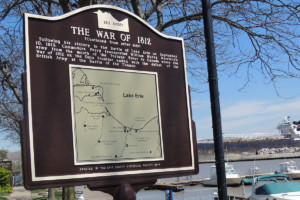
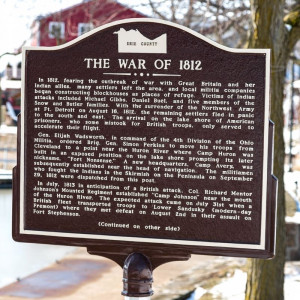 THE WAR OF 1812
Marker can be reached from the intersection of Main Street and Cleveland Road West. It is at the Huron Boat Basis (Anchor Point).
Side 1: In 1812, fearing the outbreak of war with Great Britain and her Indian allies, many settlers left the area, and local militia companies began constructing blockhouses as places of refuge. Victims of Indian attacks included Michael Gibbs, Daniel Buel, and five members of the Snow and Butler families. With the surrender of the Northwest Army at Fort Detroit on August 16, 1812, the remaining settlers fled in panic to the south and east. The arrival on the lake shore of American prisoners, who some mistook for British troops, only served to accelerate their plight. General Elijah Wadsworth, in command of the 4th Division of the Ohio Militia, ordered Brigadier General Simon Perkins to move his troops from Cleveland to a point near the Huron River where Camp Huron was built in an exposed position on the lake shore prompting its later nickname, “Fort Nonsense.” A new headquarters, Camp Avery, was subsequently established near the head of navigation. The militiamen who fought the Indians in the Skirmish on the Peninsula on September 29, 1812 were dispatched from this post. In July, 1813 in anticipation of a British attack, Colonel Richard Mentor Johnson’s Mounted Regiment established “Camp Johnson” near the mouth of the Huron River. The expected attack came on July 31st when a British fleet transported troops to Lower Sandusky (modern-day Fremont) where they met defeat on August 2nd in their assault on Fort Stephenson. Photograph credit: J. J. Prats
 HURON CORPORATE LIMIT MARKER
Leading Ohio Builder of Steamships in the 1830s.
Learn more about Huron and its ship building history HERE.
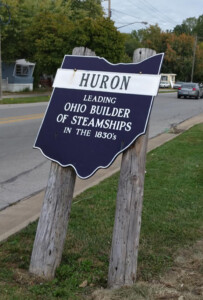 HURON CORPORATE LIMIT MARKER
Location: On Cleveland Rd., just east of Rye Beach Road
Leading Ohio Builder of Steamships in the 1830s.
Learn more about Huron and its ship building history HERE.
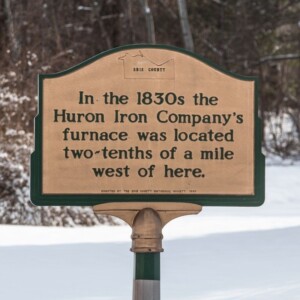 HURON IRON COMPANY FURNACE
Marker is near Vermilion, Ohio, at the intersection of State Road (Ohio Route 60) and Darrow Road, on the right when traveling south on State Road.
In the 1830s the Huron Iron Company Furnace was located two-tenths of a mile west of here. Erected 1989 by the Erie County Historical Society.
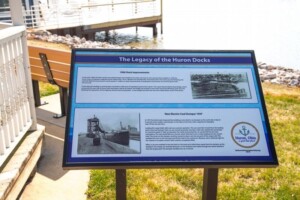 The Legacy of Huron Docks – 1906 Dock Improvements. In 1906 the Army Corps of Engineers widened Huron Harbor from 120 to 180 feet and extended the west break wall. In 1937 the docks were improved by installing a new electric car dumper on the north side of slip #1. READ MORE
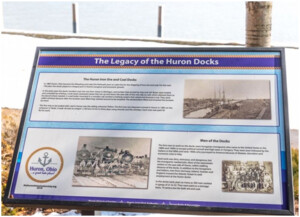 The Legacy of the Huron Docks – The Huron Iron Ore and Coal Docks/Men of the Docks. The Huron Iron Ore and Coal Docks. In 1882 Huron, Ohio became the Wheeling and Lake Erie Railroad’s port on Lake Erie for the shipping of iron ore and coal. For the next 100 years the docks played an integral part in Huron’s progress and economic growth. READ MORE
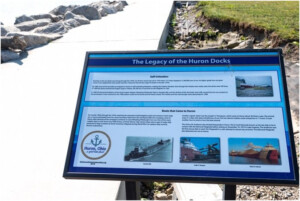 The Legacy of the Huron Docks – Self-Unloaders/Boats that Came to Huron. Business at the ore docks was strong through the 1970s. An all time record was set in 1979 when 151 boats shipped in 2,784,000 tons of ore. As higher grade iron-ore grew scarce it was replaced by lower grade taconite. It became the primary cargo for boats in the late 1970s. READ MORE
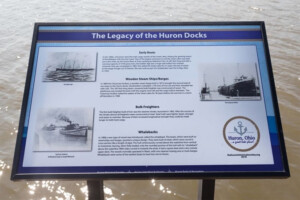 Legacy of the Huron Docks – Early Boats/Wooden Steam Ships and Barges/Bulk Freighters/Whalebacks. Early Boats. In the 1800s, schooners were the main cargo vessels of the Great Lakes, linking the growing towns of the Midwest with the East Coast. One of the largest schooners to sail the Great Lakes was built just a few miles up the Huron River at Fries Landing by Valentine Fries. READ MORE
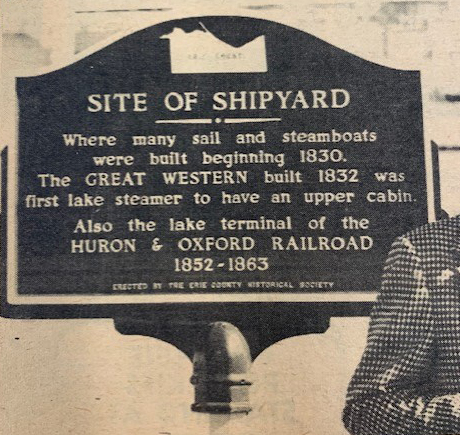 SITE OF SHIPYARD – Where many sail and steamboats were built beginning 1830. the GREAT WESTERN built 1832 was first lake steamer to have an upper cabin. Also the lake terminal of the HURON & OXFORD RAILROAD 1852-1863.
The marker was erected by the Erie Co. Historical Society just South of where the old Twine House restaurant was located in Huron. It has disappeared and the Huron Historical Society is trying to locate it. They believe it was removed when the Twine House burned down. The city of Huron has no idea what happen to it. Gone but not forgotten. Read about its dedication HERE.